Full-Stack Brand, E-Commerce & Growth System Build
Content Strategy & Go-to-Market Positioning
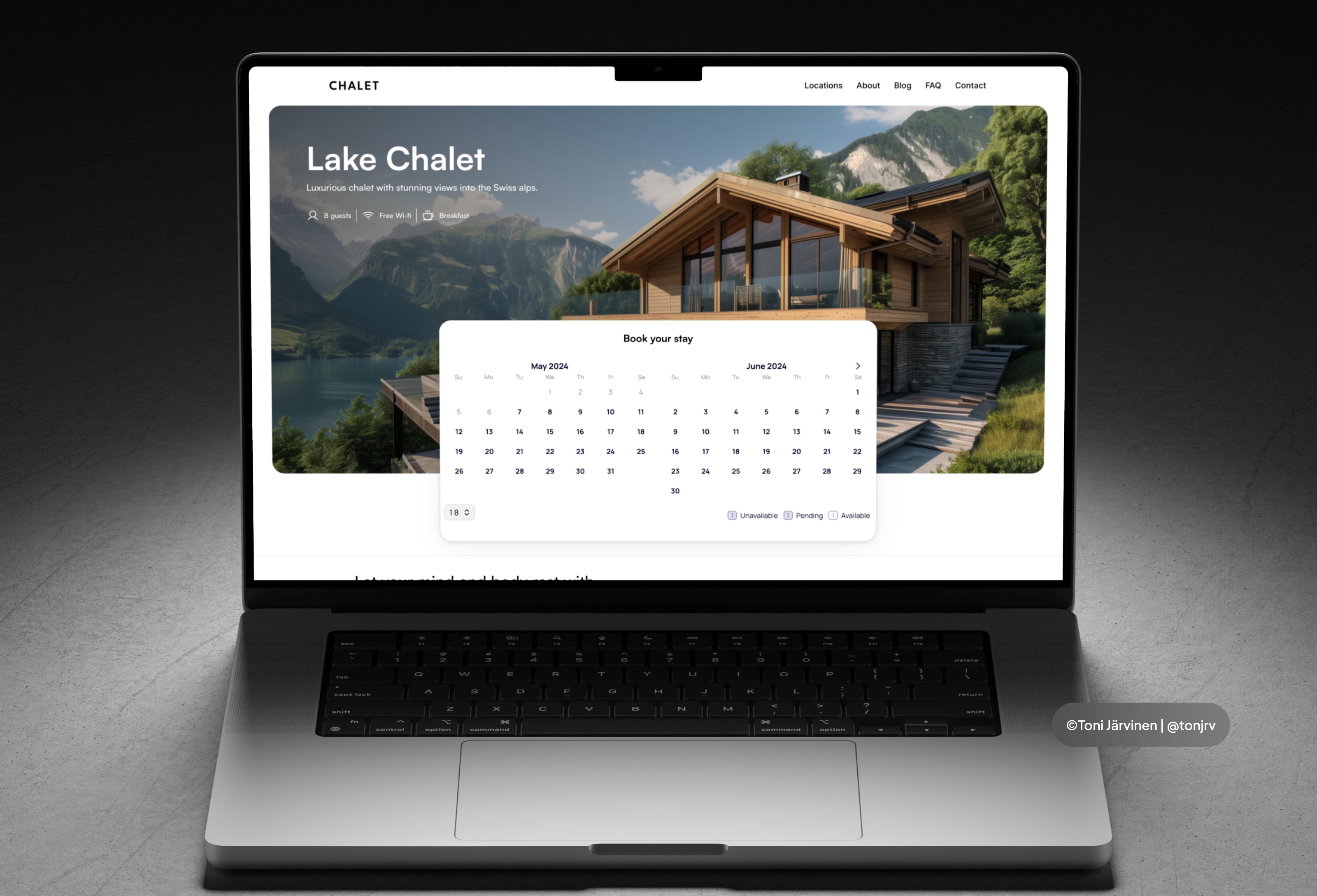
Innovative booking platform
Project description
Blues is a leading music streaming platform aimed at independent artists and listeners seeking unique, under-the-radar tracks. As the company looked to scale, they needed a website overhaul that would enhance user experience, streamline content discovery, and increase conversion rates for premium memberships.
Process
This category details the step-by-step approach taken during the project, including research, planning, design, development, testing, and optimization phases.
No Brand Identity
No visual system, no brand voice, no positioning, no name recognition
No Brand Identity
No visual system, no brand voice, no positioning, no name recognition
No Digital Presence
No website, no domain, no social media accounts, no Google Business Profile
No Digital Presence
No website, no domain, no social media accounts, no Google Business Profile
No Sales Infrastructure
No e-commerce platform, no payment gateway, no product catalogue published
No Sales Infrastructure
No e-commerce platform, no payment gateway, no product catalogue published
No Audience
No email list, no social following, no existing customer database
No Audience
No email list, no social following, no existing customer database
No Traffic System
No SEO foundation, no paid media, no content distribution
No Traffic System
No SEO foundation, no paid media, no content distribution
No Revenue Mechanism
No conversion path, no checkout, no post-purchase flow
No Revenue Mechanism
No conversion path, no checkout, no post-purchase flow
Solution
The resulting AI-powered scheduling app offers a seamless user experience, allowing individuals and businesses to effortlessly manage their schedules.
Target Market & User Persona
Based on the client's inventory and vision, we researched the demographics, pain points, and online shopping behaviour of women in South Africa. The findings defined the target market and informed the personas the entire strategy was built around.
Launch in Gauteng Only
A R35,000 budget cannot cover a national market credibly. The strategy concentrated spend in Gauteng, the highest concentration of South African online shoppers, the highest average household income, and the client's home base. Tighter geography kept CPM and CAC targets commercially viable.
Multichannel Social Across Instagram, Facebook, TikTok, and WhatsApp
South African mobile behaviour doesn't follow Western playbooks. Each platform was assigned a role based on where it dominates: TikTok for cold reach across all age groups, Instagram for the 20–30 segment, Facebook for 35+, and WhatsApp as the primary lead nurture and conversion channel, where open rates and response cycles outperform email in this market by a significant margin.
Four Phases Mapped to Audience Temperature
A single campaign serving conversion messages to cold audiences wastes spend. The campaign ran in four phases, Pre-Launch, Brand Awareness, Lead Generation, Warm/Hot Retargeting, each engineered for where the audience sat in the funnel. Cold spend built awareness, warm spend captured leads, hot spend converted revenue.
Launch Gauteng Only
Gauteng concentrates South Africa's highest density of online shoppers and highest average household income. Splitting the budget across all nine provinces would have produced thin, underperforming campaigns in every geography. Gauteng-only gave the paid media budget enough concentration to reach saturation within a defined area, and enough data to optimise against before expanding.
Position in the Underserved Middle
The South African women's fashion market has a clear premium tier (Poetry, Veronika Maine) and a clear value tier (Shein, H&M, Superbalist). The gap is in the middle: accessible luxury for South African women who want quality and cultural resonance without enterprise pricing. Oh! Divine Fashion was built to own that gap, not as a compromise, but as a deliberate positioning decision supported by competitor keyword analysis showing low competitive density in the middle price-point segment.
WhatsApp as Primary Conversion Channel
South African mobile behaviour does not follow Western playbook assumptions. WhatsApp is not a messaging app in the South African commercial context, it is a commerce channel. Open rates above 90%, response times measured in minutes rather than hours, and a direct-message intimacy that email cannot replicate made WhatsApp the right conversion layer for warm and hot audiences. Email handled longer-form nurture. WhatsApp closed the sale.
Sequence Infrastructure Before Paid Media
The most common mistake in budget-constrained brand launches is to start with paid media, because it is the fastest way to generate traffic, and traffic feels like progress. It is not progress if the infrastructure that traffic arrives at is not ready to convert it. Brand identity, website, trust signals, and product pages were completed before a single rand was committed to paid amplification.
Position around the underserved middle, not the whole market
"Built for the 14,000, not the 21" became the single sentence every downstream decision had to serve, messaging, keyword priority, even which case studies to feature.
GEO as a core pillar, not a keyword afterthought
Generative Engine Optimisation was built into the campaign objectives, the content architecture, and the KPI framework from the start, not bolted onto one content cluster after the fact. Every pillar article was built with a quick-answer block, structured extractable content, and schema markup as a production standard, not an optional pass.
Expand the research past the brief
The original brief targeted attorneys. I conducted independent research into how the South African legal industry is structured surfaced a second, sharper opportunity: advocates, who are legally barred from forming firms and are consequently talked past by every existing competitor. I added this as a documented expansion track, not a replacement for the core campaign.
Build one connected campaign, not six deliverables
Every phase of this project was built to transition naturally into the next: personas built in Phase 1 drove the content plan in Phase 2, which drove the SEO brief in Phase 3, the social calendar in Phase 4, the paid media plan in Phase 6, and the KPI framework measured in Phase 5 traced back to the SMART targets set in Phase 1.
Intelligent Scheduling
AI algorithms analyze user preferences, availability, and priorities to generate optimized schedules.
Calendar Integration
Seamless integration with popular calendar platforms such as Google Calendar and Outlook, ensuring synchronized scheduling across devices.
Personalization
Customizable settings allow users to tailor scheduling preferences and priorities to their unique needs.